Guided vs self-guided tours at a glance
| Factor | Guided tour | Self-guided visit |
|---|---|---|
| Planning | Operator handles most logistics | You research routes, opening hours and connections |
| Historical context | Live explanation and questions | Guidebooks, displays and audio resources |
| Flexibility | Depends on whether the tour is private or scheduled | Full control within transport and opening-hour limits |
| Transport | Usually included on vehicle tours | Car, train, bus, taxi or a combination |
| Cost | Higher upfront price | Often cheaper, especially with a car |
| Time efficiency | Strong when the itinerary is well designed | Can be reduced by waiting and parking decisions |
| Walking support | Route choice, pacing and local judgment | You manage navigation, terrain and timing |
| Best for | First visits, tight schedules and travellers wanting interpretation | Repeat visitors, confident planners and flexible itineraries |
What counts as a guided Hadrian’s Wall tour?
“Guided tour” can describe several different products. Understanding the format is essential before comparing prices.
Guided vehicle tour
A driver-guide collects the group, transports them between sites and provides commentary during the day. Tours may be private or shared. This is the easiest format for seeing several forts and landscape stops in one day because the vehicle stays with the group.
Some products provide a driver and a separate guide; others use one person for both roles. Confirm whether commentary continues inside attractions or whether you explore museums independently.
Guided walking tour
A walking guide leads a specific section of the Wall, explains the landscape and manages the pace. Transport to and from the trail may be included, arranged separately or handled using a public bus.
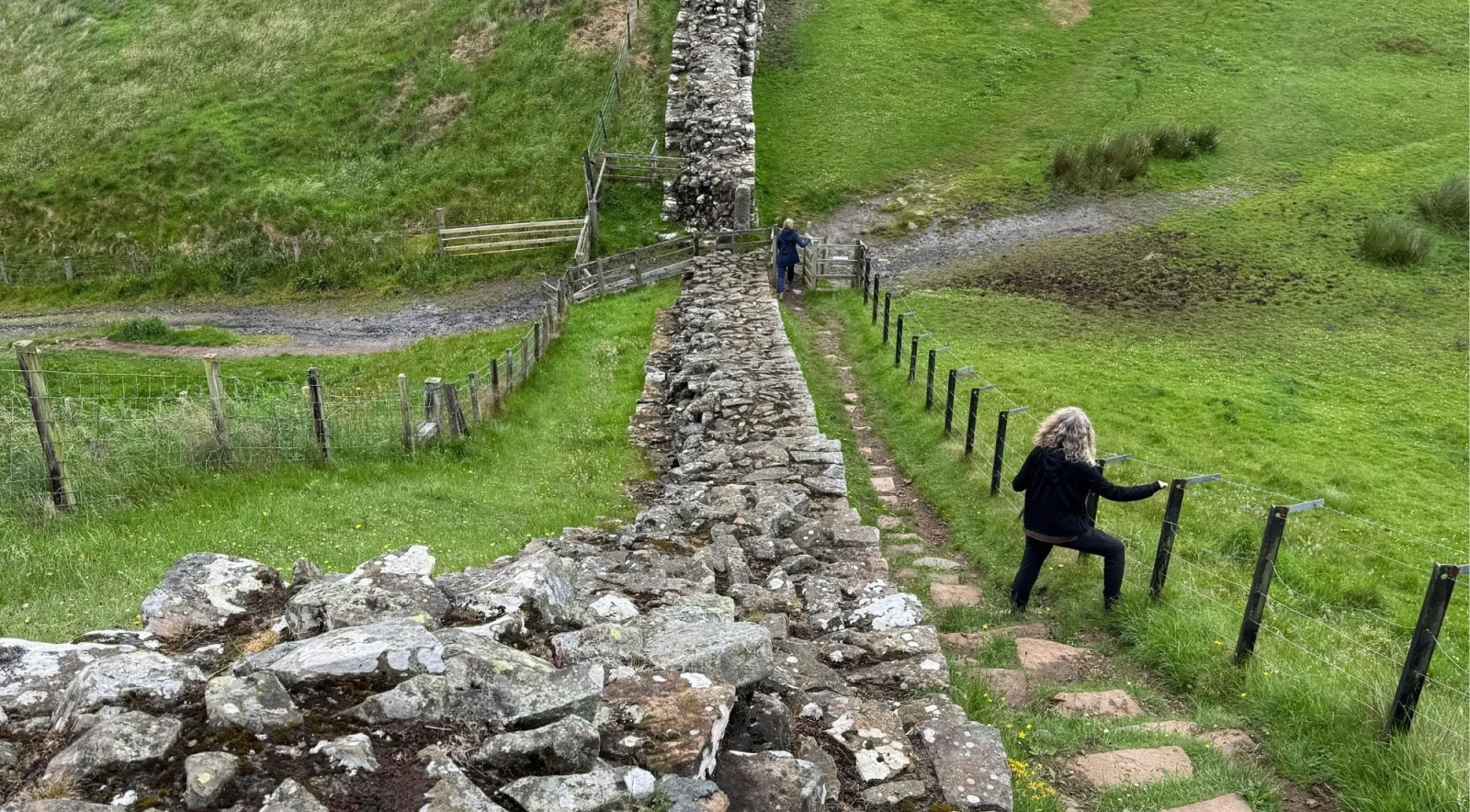
The advertised mileage is only part of the difficulty. Ascents, uneven stone, mud and exposed ridges can make a relatively short central section more demanding than a longer western walk.
Scheduled small-group tour
Small-group departures follow a fixed route and timetable. They usually cost less per person than a private tour, but offer less control over stops and walking pace. Check the maximum group size, pickup point and actual time at each attraction.
Private tour
A private guide works only with your party. The itinerary can often be adjusted for children, mobility, photography or a particular historical interest. Private tours cost more in total, but the per-person difference may narrow when several people share the vehicle.
Site or museum tour
Some attractions offer talks, tours or interpretation focused on one location. You still arrange your own transport, but receive expert context once you arrive. This can be an effective middle ground between a full guided day and a completely independent visit.
What does a self-guided visit involve?
A self-guided trip means you choose the itinerary and move between locations without a tour leader. It does not mean exploring without information. Museums, interpretation panels, maps, guidebooks and official trail resources can provide plenty of context.
Independent visitors usually travel in one of four ways:
- By car, with complete control over the route
- By train and seasonal bus
- By taxi for one or more rural transfers
- On foot as part of a single-day or multi-day walk
The critical difference is responsibility. You must check opening hours, parking, admission, bus times, weather, walking distances and the return journey. A simple plan with two major sites usually works better than an ambitious list linked by tight connections.
The main advantages of a guided tour
The frontier becomes easier to understand
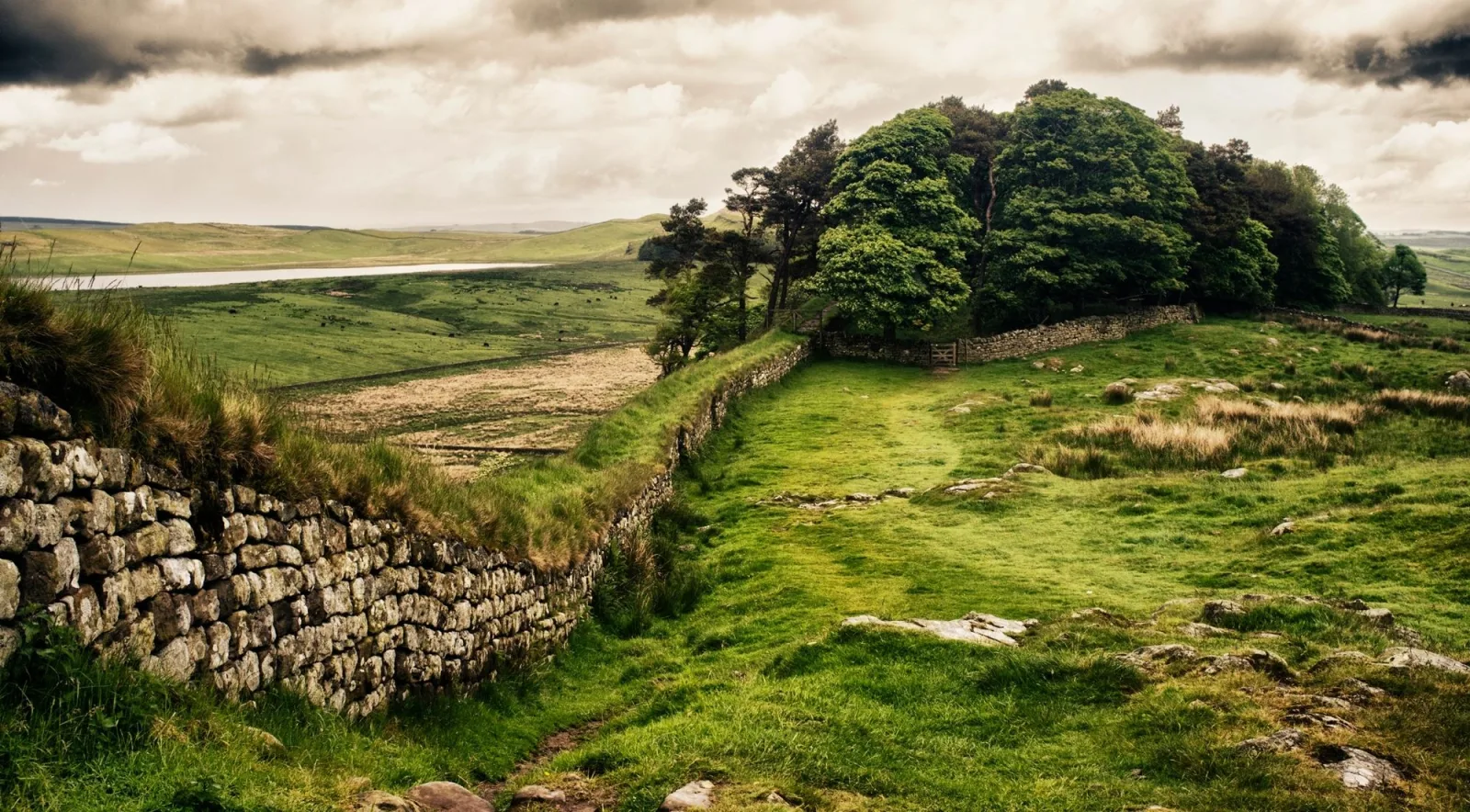
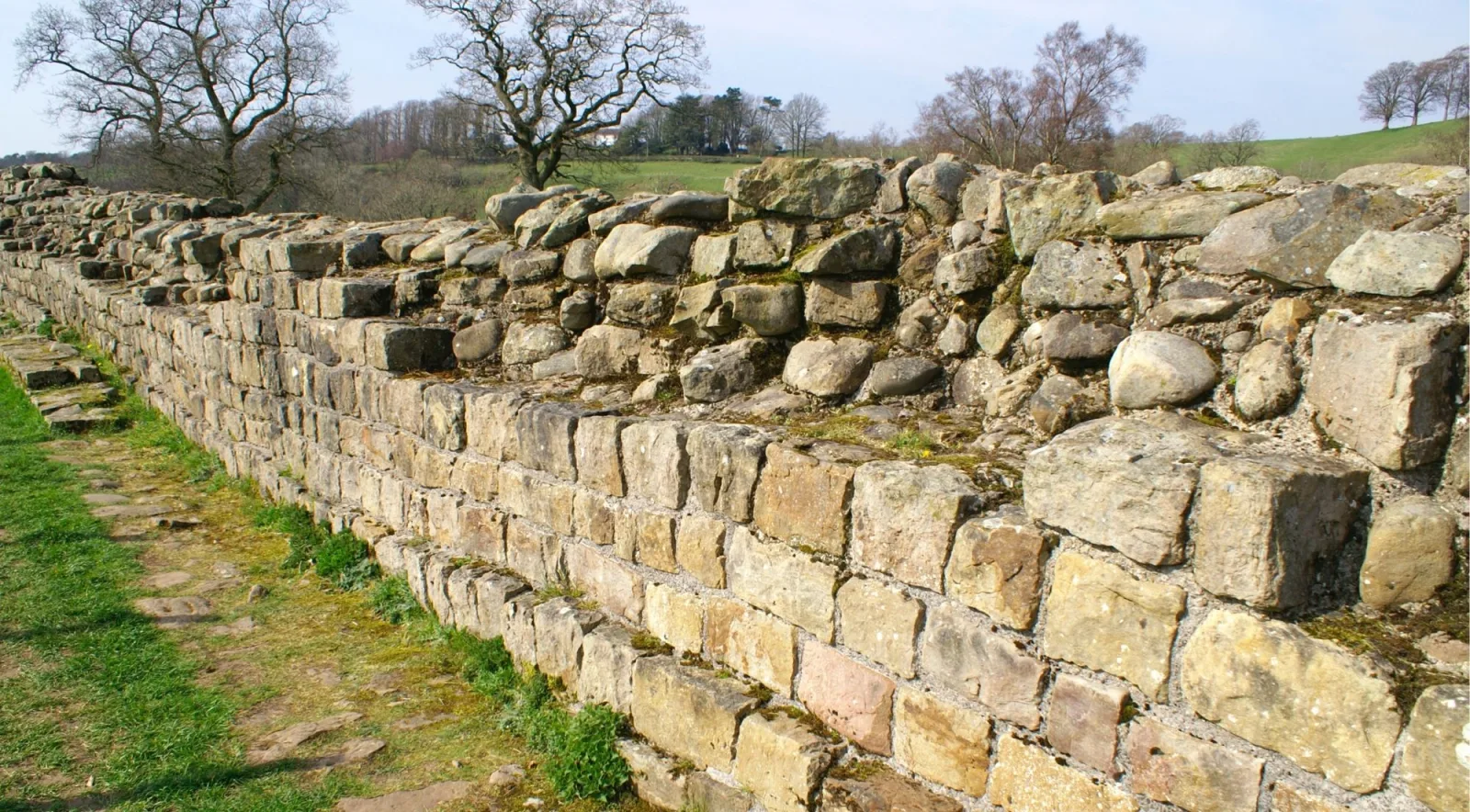
Hadrian’s Wall is not one continuous monument with a single entrance. It is a vast archaeological landscape containing forts, milecastles, turrets, roads, earthworks and civilian settlements. At some locations, the most important feature may look like an ordinary bank or ditch until someone explains it.
A knowledgeable guide connects the fragments. They can show how the Wall changed across different terrain, explain the purpose of the forts and distinguish Roman remains from later alterations. This context is especially valuable for a first visit.
Rural transport is much simpler
Many of the best-known sites are separated by country roads and walking paths. A vehicle tour avoids coordinating trains, buses and taxis and reduces the risk of missing the final connection.
This advantage is greatest outside the main season, when daylight is shorter and some services operate less frequently. It also matters when travelling from Edinburgh, Carlisle or another city that adds a long transfer to the day.
A guide helps you use limited time well
Visitors often underestimate how long Vindolanda, Housesteads or the Roman Army Museum can take. A good guide knows which combinations are realistic and where a short scenic stop adds more than another rushed museum.
On a one-day visit, efficient routing can be worth more than the apparent saving of travelling independently. The benefit is not simply seeing more places; it is spending the right amount of time at the places you choose.
Walking routes can be matched to the group
An experienced walking guide can select a section appropriate for the weather, fitness and interests of the group. They also know the access points, escape routes and transport options that are easy to miss when planning from a map.
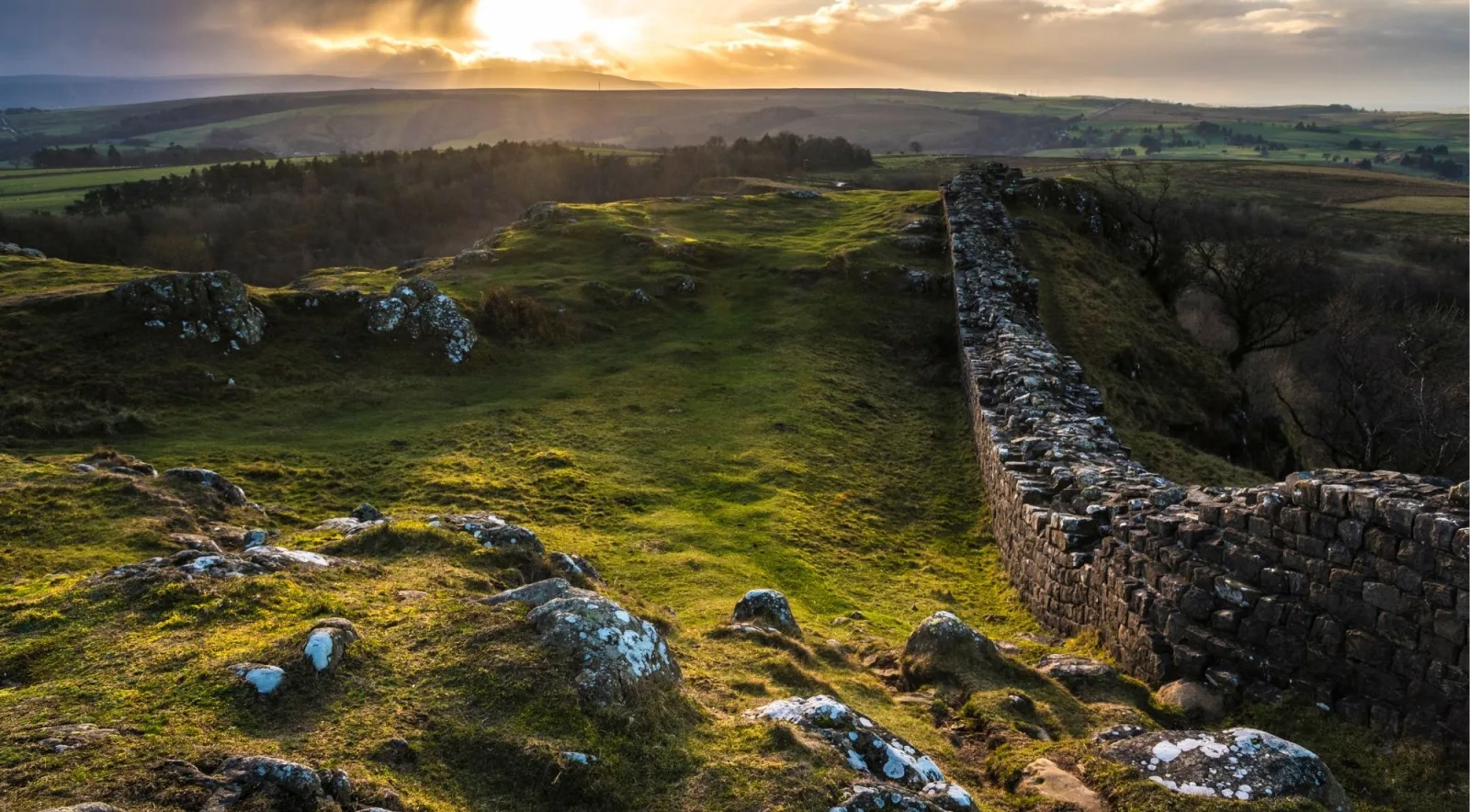
Guidance is particularly useful on the central crags, where steep slopes and exposed ground can surprise visitors expecting a gentle path beside a wall.
You can ask questions
Live interpretation is responsive. A family can focus on daily Roman life, an archaeology enthusiast can discuss excavation evidence, and a photographer can ask about viewpoints and light. This turns a standard route into a more personal experience.
The disadvantages of a guided tour
It costs more
Guiding, transport and operator overheads increase the upfront price. Admission and meals may still be extra, so read the inclusions carefully.
For a solo traveller, a shared tour is normally more economical than a private vehicle. For a family or group of friends, dividing a private tour price can make the difference per person more reasonable.
Scheduled itineraries limit freedom
A fixed tour may leave a museum before you are ready or spend longer at a stop that is not central to your interests. Pickup and return times are also set in advance.
Private tours reduce this disadvantage, but even they remain subject to attraction opening hours, road conditions and the total booked duration.
Tour quality varies
A long list of destinations does not guarantee a good experience. Some tours provide detailed historical interpretation; others are mainly transport with short introductions. Look for specific information about the guide, group size, walking and time at each site.
Reviews can help, but read them for recurring details rather than relying only on the overall score. Comments about pacing, knowledge and vehicle comfort are more useful than generic praise.
The main advantages of going self-guided
You control the pace
Independent travel lets you spend three hours at Vindolanda, wait for changing light at Steel Rigg or skip a museum when the weather is too good to stay indoors. There is no group waiting for you and no obligation to follow a preset schedule.
This freedom is particularly valuable to photographers, keen walkers and repeat visitors who already know their priorities.
It can cost less
If you already have a car, a self-guided day may require only fuel, parking, admission and food. Public transport can also be economical when the route is simple and timed well.
The comparison becomes less clear when taxis, car hire or multiple single admissions are added. Calculate the complete trip rather than comparing a tour price with only one bus fare.
You can build a highly specific itinerary
Perhaps you want to focus on Roman writing tablets, walk one precise National Trail section or visit a quiet western turret. Independent planning provides complete control, even when the interest is too specialised for a standard group tour.
It suits spontaneous travellers
With a car and flexible accommodation, you can adjust the day to the forecast. A wet morning might favour museums, while a clear afternoon can be reserved for the crags. This flexibility is harder with a tour booked for a fixed route.
The disadvantages of going self-guided
Public transport requires careful coordination
Trains serve towns such as Hexham and Haltwhistle, while seasonal buses connect a number of Wall attractions. However, the sites do not all sit beside railway stations, and services may vary by date.
Always check live timetables and operating periods. Allow a buffer between connections, identify the last return option and download essential information before leaving reliable mobile coverage.
Driving is not completely effortless
A car creates freedom, but the driver must navigate unfamiliar rural roads, locate car parks and avoid overpacking the route. They may also miss some scenery while concentrating on the road.
Linear walks create another problem: the car remains at the starting point. You need a circular route, a return bus, a taxi or two vehicles.
Interpretation may feel fragmented
Individual attractions explain their own history well, but an independent visitor must connect the wider story. Reading in advance helps. A reliable guidebook or official map can make the difference between seeing isolated ruins and understanding a frontier system.
Mistakes consume more of a short visit
A missed bus, full car park or unrealistic walking estimate can remove a major site from the day. If Hadrian’s Wall is the centrepiece of a once-only trip, the consequence may matter more than the money saved.
Which option is cheaper?
Self-guided travel is usually cheapest for two or more people who already have a car. A shared guided tour can be competitive for solo travellers once car hire, fuel, parking and rural taxis are included. A private tour has the highest total price but can offer strong value to a larger party.
Use this comparison when budgeting:
| Cost | Guided tour | Self-guided visit |
|---|---|---|
| Transport | Often included | Fuel, hire car, rail, bus or taxi |
| Guide | Included | Optional guidebook, app or site tour |
| Admissions | Sometimes included | Paid separately |
| Parking | Usually included in tour price | Paid by traveller where applicable |
| Food | Usually extra | Extra |
| Planning time | Low | Higher |
| Risk of missed connections | Lower on vehicle tours | Traveller carries the risk |
Do not assume that every attraction is included because it appears in an itinerary. Look for the words “admission included,” and check whether a listed site is a full visit or an exterior stop.
Which option is best for a Hadrian’s Wall day trip?
For a first-time day trip without a car, a guided vehicle tour is usually the strongest choice. It reduces transport friction and provides the context needed to understand several sites in a limited period.
Independent travel works well when you choose a compact itinerary. Examples include Vindolanda plus the Roman Army Museum, or Housesteads plus a short nearby walk, subject to current transport and opening times. Trying to cross the entire Wall in one day is not a meaningful substitute for exploring it.
If you are travelling from Newcastle, both guided tours and public transport are practical. Carlisle is excellent for western itineraries, while an Edinburgh departure normally benefits more from organised transport because the overall day is long.
For route ideas, see our complete Hadrian’s Wall day-trip guide.
Which option is best for walking?
A confident walker can organise a self-guided day using the National Trail and public transport. This suits people comfortable with navigation, variable ground and changing weather. The official Hadrian’s Wall Path is approximately 84 miles from coast to coast, so a day walk should be treated as one selected section rather than a compressed version of the full trail.
A guided walk is better when you want historical commentary, do not know the terrain or need help coordinating a linear route. It is also reassuring for solo travellers who would prefer company in exposed countryside.
Whichever format you choose, obtain the following before setting out:
- Exact start and finish points
- Distance and total ascent
- Expected duration, including stops
- Surface and difficulty information
- Weather forecast and daylight window
- Return bus, taxi or vehicle plan
- Water, food and appropriate clothing
Our Hadrian’s Wall walking tours guide explains the main formats and route considerations.
When a guided tour is worth the extra cost
A guide provides the clearest value when:
- This is your first and possibly only visit
- You have one day or less
- Nobody in the group wants to drive
- You are travelling from a city rather than staying beside the Wall
- Roman history is a major reason for the trip
- The group has mixed mobility or interests
- You want a linear walk without managing the return transfer
- You are visiting outside the main transport season
The case is weaker when you have several days, a car, strong background knowledge and complete freedom to revisit sites.
When self-guided is the better choice
Choose an independent trip when:
- You prefer to travel slowly and change plans during the day
- You already have suitable transport
- You want to spend most of the day at one site
- Photography or a specialist interest controls the schedule
- You are an experienced walker with reliable route-planning skills
- You have visited before and do not need a general introduction
- Keeping costs low matters more than maximising the number of stops
Self-guided does not have to mean doing everything alone. You can combine independent transport with a guided visit at one site, hire a guide for half a day or use a taxi for the awkward part of a linear walk.
A hybrid approach: often the best of both
Many visitors benefit from combining the two formats. Book a guided tour on the first day to understand the frontier, then return independently to the site or path that interested you most. Alternatively, take a guided morning walk and spend the afternoon exploring a museum at your own pace.
Other useful combinations include:
- Train to a nearby town, then a prebooked guide and vehicle
- Independent visit to Vindolanda, followed by a guided landscape walk
- Self-drive itinerary with a scheduled fort tour
- Guided transfer to a walking start point, followed by an independent hike
This approach preserves flexibility while using professional help where it adds the most value.
How to assess a guided tour before booking
Compare substance rather than marketing language. A good listing should make the day easy to picture.
Check:
- The exact pickup and return locations
- Total duration, including transfers from the departure city
- Full visits versus roadside or photo stops
- Group size and vehicle type
- Walking distance, gradients and surfaces
- Which admissions are included
- Whether the guide enters attractions with you
- Cancellation and severe-weather arrangements
- Accessibility and child-seat provision
- Whether lunch time is built into the schedule
Be cautious when an itinerary promises numerous distant attractions in a short day. Hadrian’s Wall rewards explanation and time on the ground, not rapid arrivals followed by immediate departures.
How to plan a successful self-guided day
Begin with one anchor attraction, such as Vindolanda, Housesteads or Birdoswald. Add one compatible stop nearby and only then consider a short walk or viewpoint.
Next, confirm opening hours and last admission on the attraction’s own website. Check transport for the exact date, including the return journey. If using seasonal buses such as the AD122 or western connections, do not rely on an old blog or screenshot.
Download maps and tickets where possible, carry a charged phone and keep a simple fallback plan. In poor weather, museums can replace an exposed walk. If a bus is cancelled or missed, know whether a taxi is realistically available.
Finally, avoid measuring success by the number of forts visited. One well-understood archaeological site and one memorable walk often provide a richer day than four hurried stops.
Frequently asked questions
Do you need a tour guide for Hadrian’s Wall?
No. Major sites have museums and interpretation, and the National Trail can be walked independently. A guide is most useful for connecting the scattered remains, simplifying transport and making a short visit more meaningful.
Can you visit Hadrian’s Wall without a car?
Yes. Trains, seasonal buses, taxis and walking routes can be combined. The plan should be based on current timetables and limited to a realistic area.
Are guided tours suitable for non-walkers?
Many vehicle tours require only short walks, but archaeological sites still have uneven ground. Ask for precise distances and accessibility information rather than relying on the phrase “easy walking.”
Is a private tour better than a small-group tour?
A private tour provides more control over pace and interests. A small-group tour normally costs less per person and may suit solo travellers.
Can I organise a self-guided trip from Newcastle?
Yes. Newcastle has useful rail links, and seasonal Wall buses serve several central attractions. See our guide to Hadrian’s Wall tours from Newcastle for route options.
What if the weather is bad?
Guided vehicle tours can often shift time towards museums, while independent travellers can do the same if tickets and transport allow. Exposed walks may need to be shortened or abandoned in severe conditions.
How far in advance should I book a guide?
Book early for summer weekends, private groups and dates tied to fixed accommodation. Independent travellers should also reserve popular attractions or transport whenever advance booking is advised.
Final verdict
Choose a guided Hadrian’s Wall tour if you want a straightforward day, expert interpretation and efficient transport between scattered sites. It is especially worthwhile for first-time visitors, travellers without a car and anyone trying to make one day count.
Choose self-guided travel if flexibility, privacy and control of the budget matter most. It works best with a car, a focused itinerary or enough time to absorb the occasional delay.
If neither description fits perfectly, use a hybrid plan. Professional guidance adds the most value when history, navigation or transport becomes complicated; independence adds the most value when you want to linger.
Compare current guided Hadrian’s Wall tours, or read our guide to the best Roman forts on Hadrian’s Wall to decide which sites are worth the admission either way.
Sources and travel updates
Details checked 18 September 2026. Confirm times, admissions and pickup arrangements for your travel date.